

Empower Dyslexic Thinking in the Workplace

Dyslexic Thinking is worth $4.5 Trillion Dollars to the global economy

But $3.2 Trillion Dollars remains untapped, because only 30% of dyslexic thinkers are empowered at work 

Our new report finds Dyslexic Thinking is worth: 

  • $4.5 Trillion Dollars to the global economy 
  • $652 Billion Dollars to the US economy 
  • £98.2 Billion Pounds to the UK economy 

But economies are missing out, because dyslexic thinkers – who have the skills to drive growth and innovation – are not fully empowered at work.

This report outlines – for the first time – the financial imperative to empower Dyslexic Thinking. And poses the $Trillion Dollar Question can we afford not to empower Dyslexic Thinking? 

Every organisation can learn how to empower Dyslexic Thinking for free with our new Workplace Guide and our free training below. 

 

Read the Return on Dyslexic Thinking report

Open the Workplace Guide

Who holds the skills to drive innovation? Dyslexic thinkers

We’ve known the value of Dyslexic Thinking for a long time. In 2018, our first report found that Dyslexic Thinking matched the skills future workplaces needed. Recognising this, LinkedIn added it as a skill in 2022.

Our Intelligence 5.0 report and studies from the World Economic Forum show that Dyslexic Thinking skills are the most in-demand human skills worldwide.

Now this report underlines the financial value of Dyslexic Thinking – by showing the skills dyslexics have are the human skills needed to pair with AI to drive growth and progress. 


Return on Dyslexic Thinking – 2025

Intelligence 5.0 – 2024

Value of Dyslexia 2 – 2019

Value of Dyslexia 1 – 2018

How to empower Dyslexic Thinking

By following these four steps, you can empower Dyslexic Thinking and unlock growth:

Step 1: Define dyslexia as a valuable skill 

Step 2: Offer adjustments that enable dyslexics to thrive

Step 3: Tailor recruitment processes for dyslexics

Step 4: Support Dyslexic Thinking communities 

Become a Dyslexic Thinking Workplace

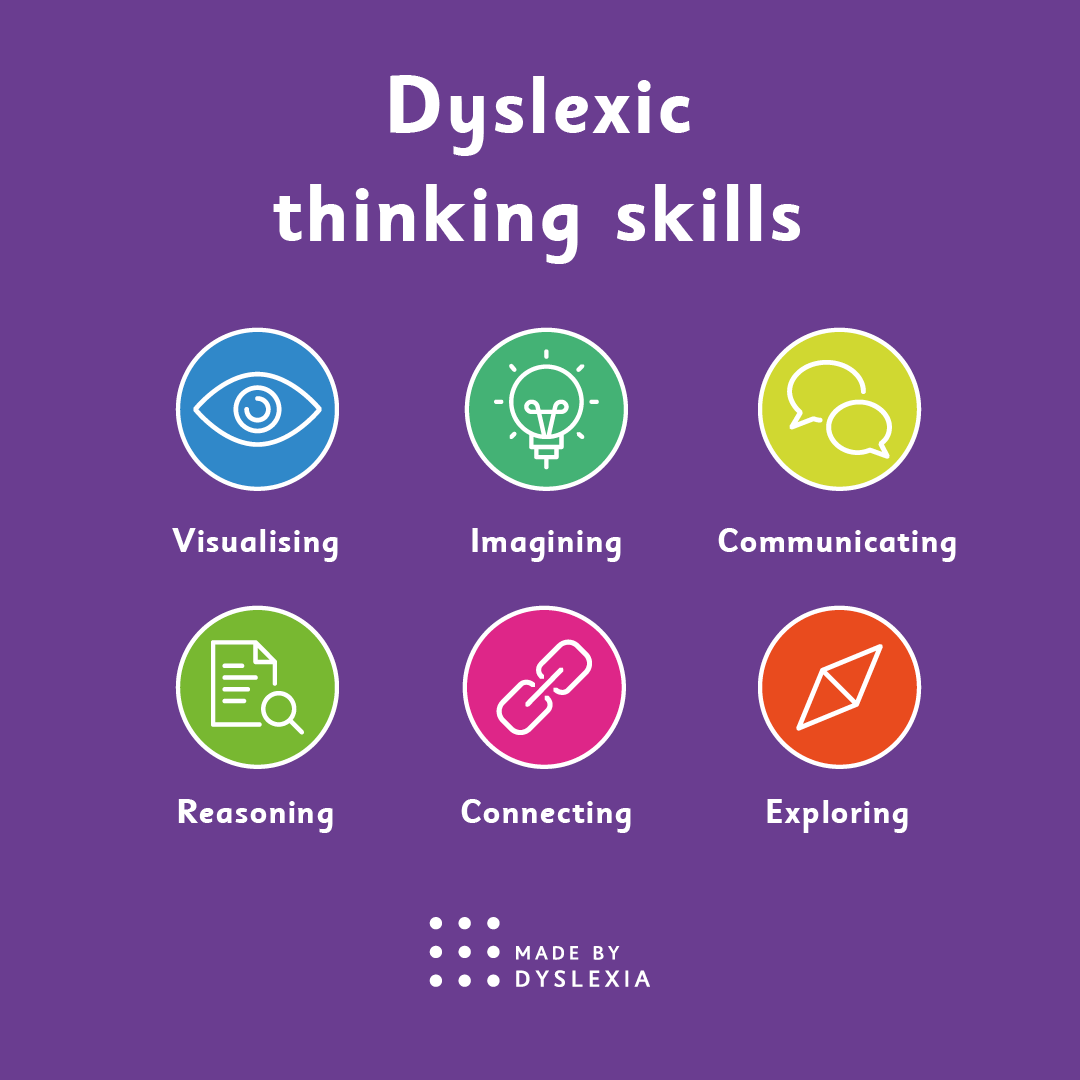
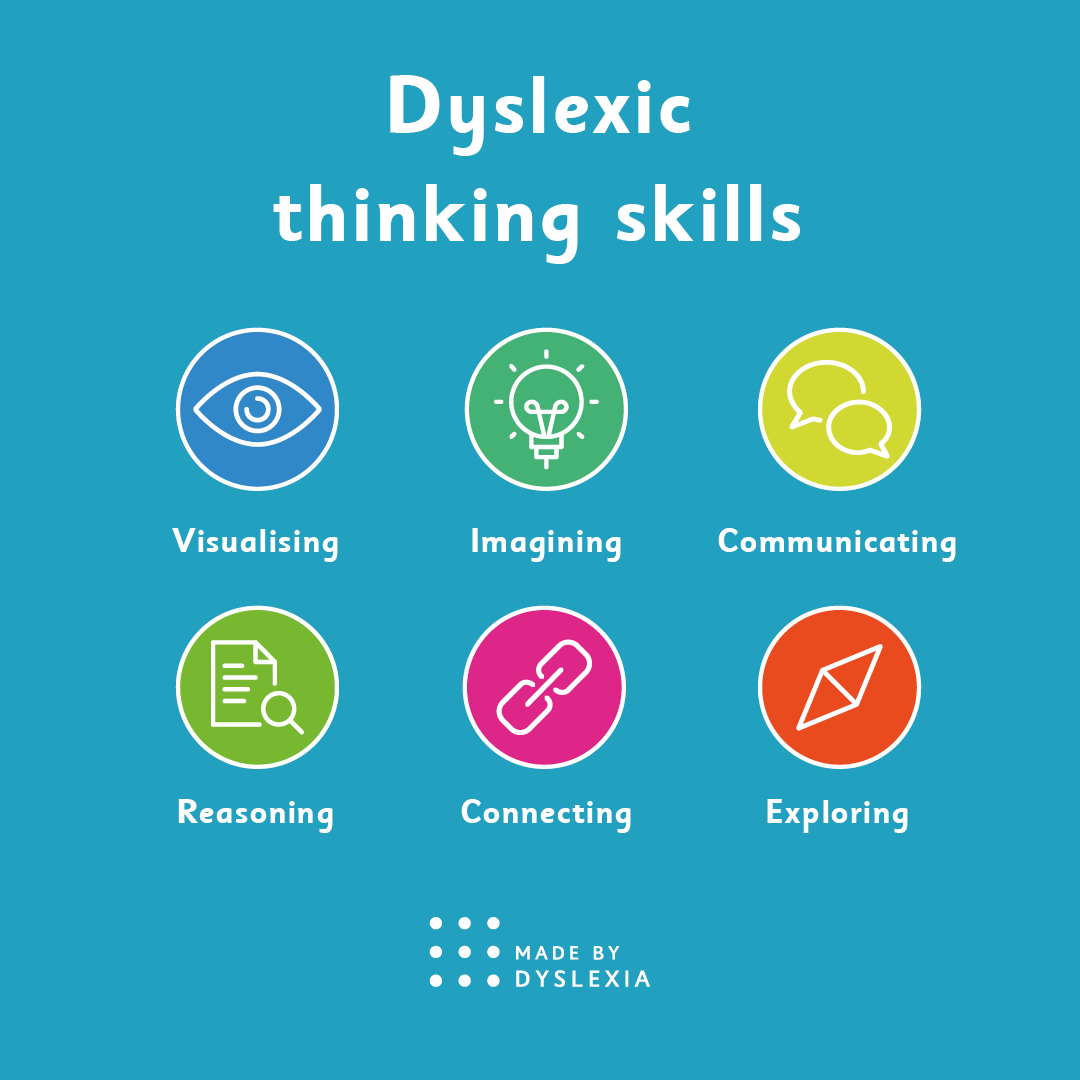
Dyslexic Thinking brings valuable skills to business: creativity, problem-solving, communication and entrepreneurial thinking.

A Dyslexic Thinking Workplace understands this value and takes practical action to help dyslexic people thrive. It shows your people, future talent and customers that your organisation recognises Dyslexic Thinking as a skill.

Complete the steps below to become a Dyslexic Thinking Workplace, recognised by Made By Dyslexia.

1. Learn

Commit to train all Senior Leaders and HR, Talent, L&D and D&I with our free training within the next 12 months and make it available to everyone in your organisation.

LinkedIn Training

DyslexicU Training

2. Evaluate

Use our Navigator tool, developed with Randstad Enterprise, to evaluate your current systems and culture, identify opportunities for improvement, and understand where your organisation can evolve.

Use Navigator

3. Support

Made By Dyslexia’s resources are free for everyone. If you can, support our work through your charity-giving or payroll-giving scheme—helping us reach more dyslexic people and workplaces.


Commit today

Download our FREE resources

Empower Dyslexic Thinking in your workplace with our workplace factsheets for employees and managers. Plus, download our FREE Dyslexic Thinking Skills posters.

Join the #DyslexicThinking movement

Join the movement to show you recognise #DyslexicThinking as a valuable skillset by showing your support on LinkedIn and, if you’re dyslexic, add it as a skill on LinkedIn today. Or encourage those who are dyslexic in your workplace to add it to their profile.

Find out more

Dyslexic Thinking Skills

How other workplaces are empowering Dyslexic Thinking

Watch our D.Spot vodcast and see how organisations like GCHQ – the British Intelligence agency are joining the dots and empowering Dyslexic Thinking through their recruitment processes, affinity groups and more.

What is Dyslexia?

Dyslexia influences as many as 1 in 5 people and is a genetic difference in an individual’s ability to learn and process information. As a result, dyslexic individuals have differing abilities, with strengths in creative, problem-solving and communication skills and challenges with spelling, reading and memorising facts.

Generally, a dyslexic cognitive profile will be uneven when compared to a neurotypical cognitive profile. This means that dyslexic individuals really do think differently. Traditional benchmarking disadvantages dyslexics, measuring them against the very things they find challenging.